
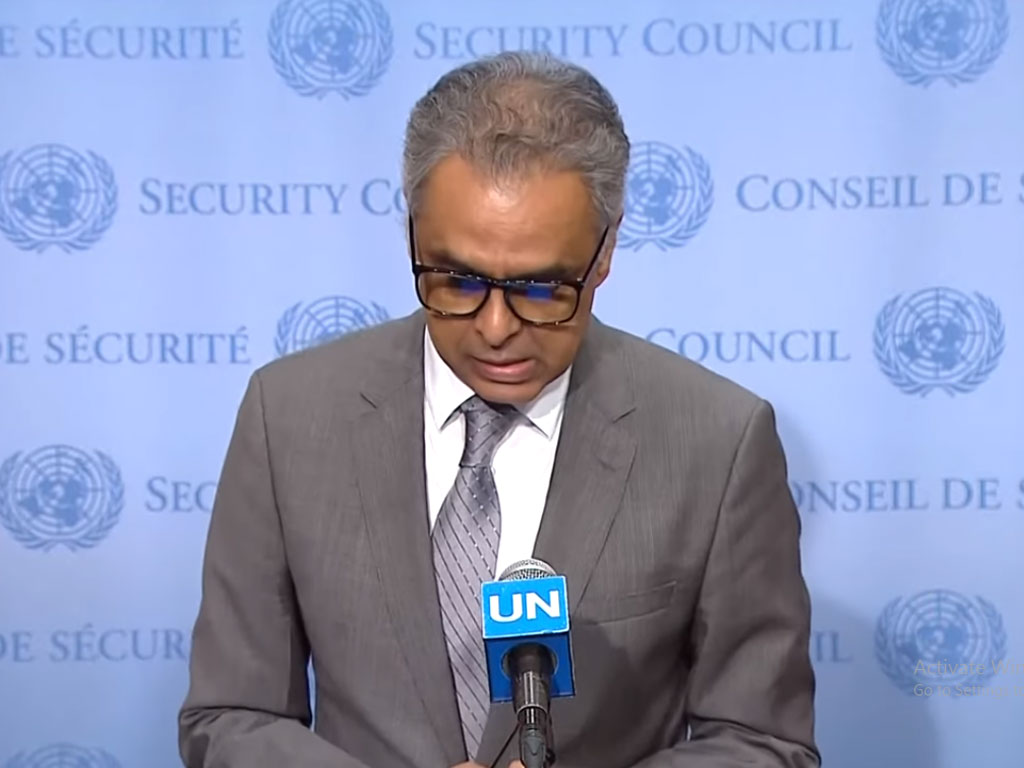
By changing the status of occupied Jammu and Kashmir (J&K) the Modi government has broken the status quo in a way that runs opposite to its expectations. For the first time in 50 years the UN Security Council held a meeting, on the request of Pakistan and China, to discuss the situation arising out of the change brought about through constitutional impropriety and repressive measures. Although the Council did not issue a formal statement, different representatives of the member nations told journalists that the meeting reaffirmed the relevant UNSC resolutions on the Kashmir issue, expressed concern over the human rights situation in the troubled region, and urged India and Pakistan to refrain from taking any unilateral action that might further aggravate the tensions in the already "very tense and very dangerous situation." Pakistan thus can rightly claim success in countering Indian claims on three vital counts: first, that Kashmir is an international rather than a bilateral issue; second, the UN resolutions are still relevant; and third the Kashmiri people are being subjected to gross human rights violations. Significantly, even Russia, after initially terming the status change move as an internal matter of India, has not taken a dissenting position.
What transpires in the world's highest forum normally is forgotten unless the big powers' interests are involved. In this case, many of them have substantial economic interests to protect and promote. Yet the fact that despite India's best attempts to stop the UNSC from taking up the issue the meeting did take place shows there are real worries about rising Pak-India tensions amid a grave human right situation in occupied J&K. Anyone familiar with the region's politics knows that to cover up its atrocities, India could resort to some misadventure against Pakistan, leading to an all-out war between the two nuclear-armed neighbours. In fact, cheered on by BJP government's ultra Hindu nationalist base and blinded by arrogance of false power, India's Defence Minister Rajnath Singh lent validity to these fears when the other day he hinted at abandoning his country's 'no first use' policy regarding the nuclear option. Like any sane person, Pakistan's Foreign Minister Shah Mahmood Qureshi has rightly described the "substance and the timing" of Singh's statement as "highly unfortunate and reflective of India's irresponsible and belligerent behaviour."
Pakistan is doing all it can to prevent things from taking a turn for the worse. Qureshi disclosed on Friday that Prime Minister Imran Khan had called US President Donald Trump - who just last month told Khan he would be happy to help resolve the Kashmir issue as a mediator - and apprised him of the "delicate situation" created by India's "unilateral action" threatening regional peace. And that Trump assured Khan that he would engage with Prime Minister Modi on the issue. According to a White House statement, "the President conveyed the importance of India and Pakistan reducing tensions through bilateral dialogue regarding the situation in Jammu and Kashmir." That is fine as formal statement. But what is giving rise to tensions is that the people of Kashmir are not willing to give up their fight for freedom from Indian rule. Unless and until the situation is resolved according to the wishes of the Kashmiri people, India will continue to ratchet up tensions with Pakistan as a diversionary tactic, endangering the peace and security of this region, and beyond. It can only be hoped, influential international players, especially the US, will help resolve the situation before it spirals out of control.