
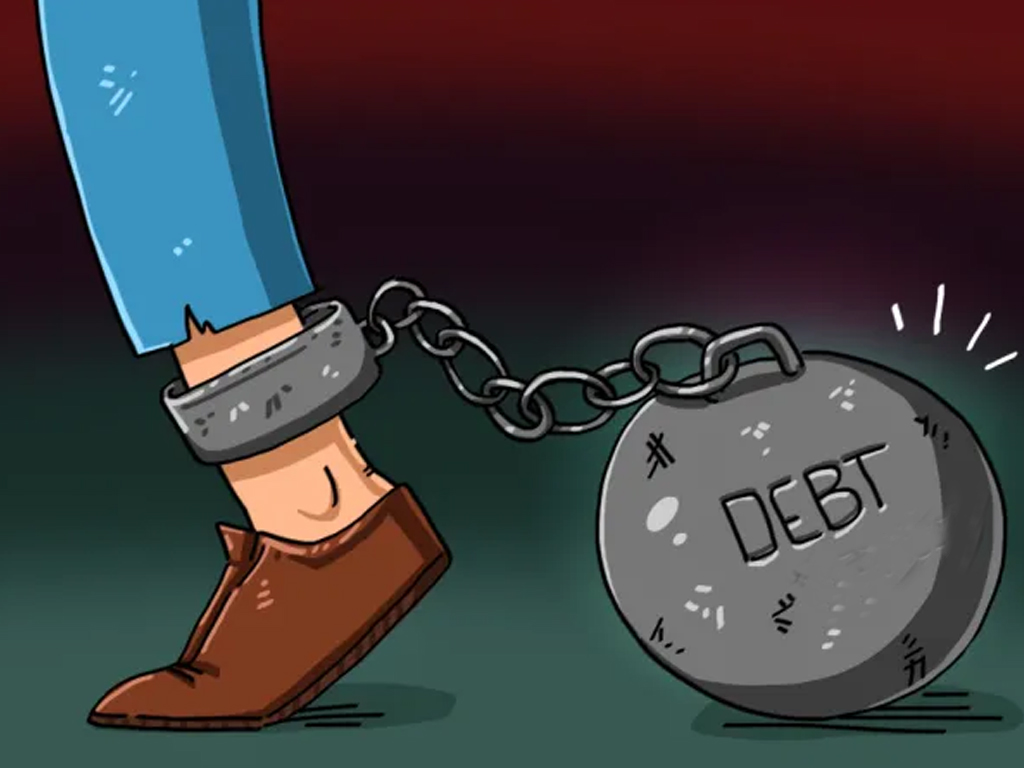
The Pakistan Tehreek-e-Insaaf government's reliance on debt equity is exceeding the reliance placed by the then Finance Minister, Ishaq Dar, on this very expensive source of finance. Debt includes: (i) Eurobonds/sukuk. The incumbent government has not yet issued either of these bonds though there are reports that it is considering issuing them in the near future. Pakistan Banao Certificates were however launched by the PTI government and envisage an interest of 6.25 percent for those maturing in three years and 6.75 percent for those maturing in five years; (ii) loans procured to deal with power sector arrears attributed to poor governance (the Dar-led Finance Ministry cleared over 400 billion rupee circular debt by borrowing from domestic commercial banks in June 2013 with the interest on this loan still being paid by electricity consumers and the PTI government is planning to borrow half that amount - 1.44 billion dollars or around 200 billion rupees for the same purpose from Islamic financing through a consortium led by Meezan Bank over and above the more than 100 billion rupees already borrowed from a consortium of banks led by National Bank; (iii) Panda bonds in the Chinese capital market though the exact amount and the terms are yet to be finalized by the financial advisor whose services have been invited by the government; (iv) commercial borrowing from abroad with a small amortization period and at a high rate of return. The previous administration relied heavily on this as a source of finance - up to 4 to 5 billion dollars in the last fiscal year was borrowed from commercial banks abroad and the PTI government has not abandoned this source of financing though it reduced the reliance considerably and borrowed up to half a billion dollars from foreign commercial banks between July-December; and (iv) borrowing from the State Bank of Pakistan and/or issuing treasury bonds, a critical component of a country's monetary policy. The PTI government has engaged in borrowing heavily from the SBP - to the tune of over 3 trillion rupees in the current fiscal year to date, higher than in the comparable period of the year before (a highly inflationary policy that is going to be opposed by the International Monetary Fund as and when an agreement is reached for a bailout package).
The rate of return allowed on debt is a function of the country's rating and in Pakistan's case, it is extremely disturbing that the government has decided to raise debt at a time when both Fitch and Standard & Poor's, two out of three major global rating agencies, have downgraded Pakistan's ranking - the former downgraded Pakistan's foreign currency issuer default rating from B to B negative and the latter lowered Pakistan's long-term sovereign credit rating soon after the government launched the five-year dollar-denominated Pakistan Banao Certificates from B to B negative. This explains why the interest rate on the debt instruments is more than double the prevalent rate in the international marketplace and this, coupled with the rupee depreciation, is expected to add exponentially to Pakistan's external indebtedness in months to come. One can only hope that the government's over-optimistic prognosis for future growth of the economy and foreign investment inflows would enable it to clear debt payments as and when due.
Be that as it may, it is relevant to note that the PML-N government procured over 35 billion dollars in loans during the first four years of its tenure - with 17 billion dollars procured to clear past debts, an amount of borrowing comparable to what the incumbent government required and 18 billion dollars to mainly meet the rising current expenditure needs (which rose from 2.6 trillion rupees in 2011-12 to 4.29 trillion rupees in 2017-18) though development projects also received federal budgetary allocations.
The PTI-led administration is correct in arguing that its inheritance with respect to the foreign debt is worse than what the PML-N government faced in 2013; however, by incurring debt on a magnitude that is higher than what was procured by the PML-N and that too within the first year of its tenure when the country is facing historically high budget and current account deficits may prove to be not a wise decision in the remaining four years of its tenure. A better option would be to slash current expenditure, procure loans to pay off past loans while focusing on luring foreign direct investment into the country as the engine of growth.