
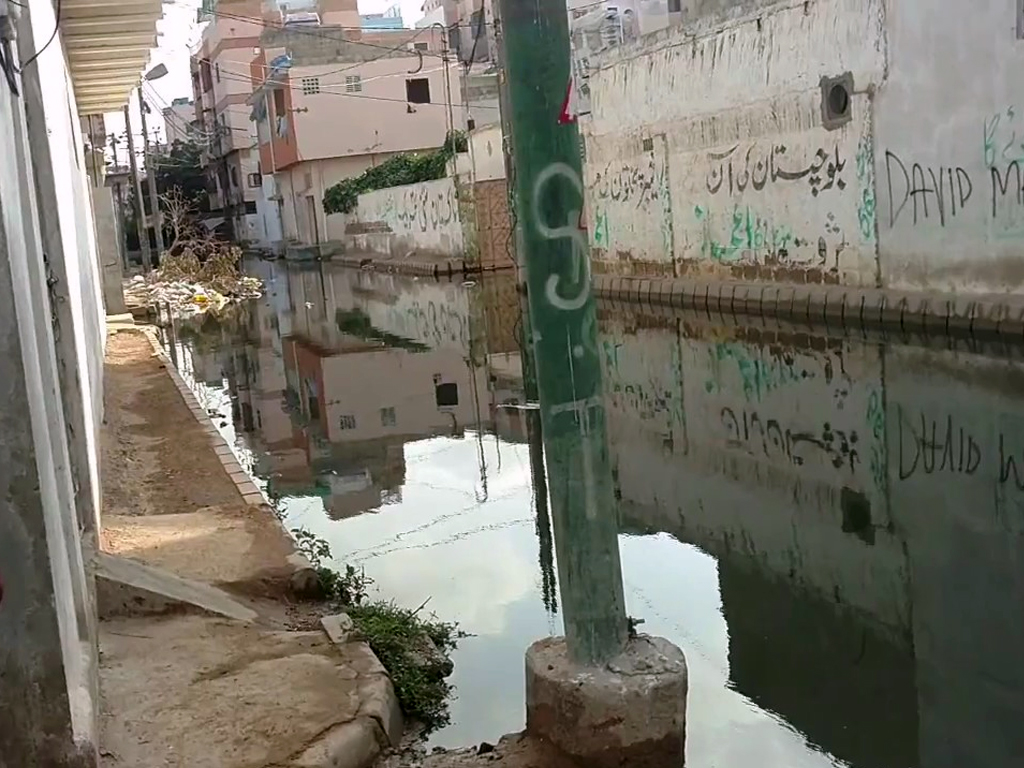
The metropolis of teeming millions, Karachi, is no more a city of lights; it's now a vast human habitat drenched in darkness, thirsty for clean drinking water, sewerage-flooded streets, and traffic-choked thoroughfares. It has become a site that enriches the national electronic media with frightening crime-scenes. Let there be a spell of light shower and its roads become impassable and electric supply gets snapped. As if abandoned by its city fathers there is no one who should own what has gone wrong with this nation's biggest employer, chief money supplier and so far the only port city with capacity and wherewithal to handle the country's foreign trade and energy supplies. And, this tragic story line gets compounded as its principal civic-management setup so very often turns itself into a Roman amphitheatre. History, however, tells us that if Karachi is unlivable today, it was not the case in the past. That its humongous size would preempt any move to recover and revive its past glory is not acceptable either. Quite a few mega cities in the world are of Karachi's size but these are very much livable.
More pointedly, the problems with Karachi include its huge population, absence of town-planning, mushrooming illegal encroachments, dysfunctional water supply mechanism, choked sewer lines and non-functional city governance. The city wasn't born with these infirmities. And possibly, given will and verve these infirmities can be cured and the city's pristine health can be restored. The one to begin with could be the control of water, both to ensure its regular supply for domestic and industrial use and to put in place the necessary wherewithal to secure the city against seasonal flooding. Of course, given low height of Karachi against the sea level, the outflow of rainwater is slow. But the problem is not with the city's low height; it is with the drains that are either blocked due to illegal constructions or choked with house garbage. And equally unhelpful is upstream management; as a result of which, the quantity of rain or river water needed to push stagnant water into the sea is not available. Karachi needs more river water. It may not be the farm to be adequately fed with water; but it is habitat where every 10th Pakistani lives. His right to have his share is sacrosanct. If he doesn't get his share of natural water or is made victim of the stagnant water in his street the ultimate sufferer would be the country's entire populace. There is no beef with the court's decision to restore Karachi to the late 1970s. But no less critical and urgent is the need to feed residents of Karachi with clean drinking water; there is also the need to ensure their residences are not flooded with sewage.