
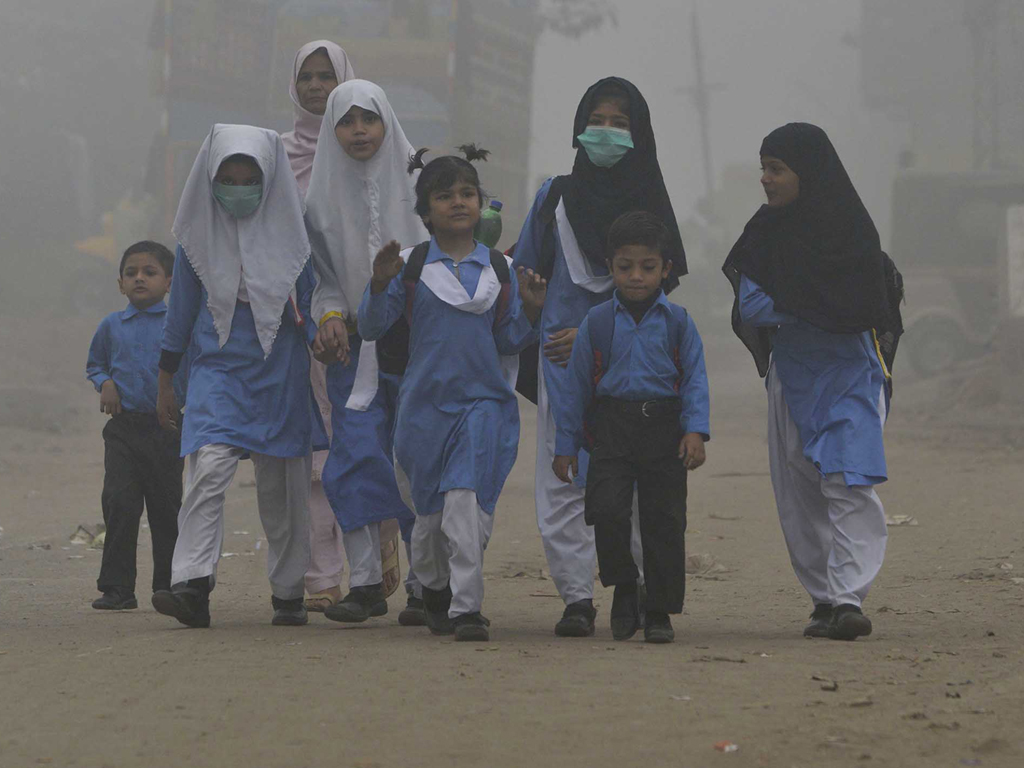
The smog that engulfed the plains of Punjab - most nastily Lahore - and parts of upper Sindh during the recent winters seemed to have died out this year since the people could not feel its immediate effects by way of eye or skin irritation and respiratory problems. But it has not gone away. According to a press report, this time, too, many in Lahore have been complaining of headaches, burning sensation in the eyes, and breathing issues. And that on some days air pollution levels in the city have been five times higher than the safe limits. Notably, a combination of high levels of pollution and temperature inversion traps pollutants in the lower atmosphere, causing smog.
This winter, it came in a relatively milder form because the government had taken some precautionary steps against the worst polluters. Brick kilns were told to control emissions by installing zigzag technology or stay shut for two months. Farmers were advised not to burn rice stubble, and those who did not listen were fined. The factories that used old tyres as fuel (the practice needs to be stopped for all times since these emissions contain carcinogens and some additional elements injurious to health) as well as several others producing high levels of harmful emissions were also closed. Air quality monitoring stations have also been reactivated. The data they collect is fed into the city's air quality index, which is updated daily ad posted on the website of the Environmental Protections Department. These measures are helpful but only for a limited time period; they do not address the pervasive problem of pollution. So far little attention is being paid to persistent sources of trouble: unethical practices in the industrial sector and vehicular traffic. The export-oriented industries do observe international pollution control standards by way of a social responsibility or because of the buyers' conditions. But the ones catering to local markets, ignore the existing national rules as a matter of routine. In the case of noxious vehicular emissions the culprit is the low quality of fuel. A couple of years ago, Shahid Khaqan Abbasi, the then minister for petroleum, had told the Economic Coordination Committee that the refineries were disinclined to invest in up-gradation of their diesel refining plants (same is the case with the more commonly used petrol), as required under the international standards. The only country other than Pakistan using this kind of fuel, he said, is Somalia. Two years on, there is no sign of any improvement.
Prime Minister Imran Khan has shown great interest in environmental issues, vowing to clean the air, water and land of pollution. After his initiative to plant a billion trees in KP he now wants to grow more and more trees all over the country to reduce carbon emissions and counter the effects of global warming. As well he might. But his government is yet to unveil a comprehensive scheme to deal with rampant pollution. It needs to come up with both a medium and long-term plan of action.